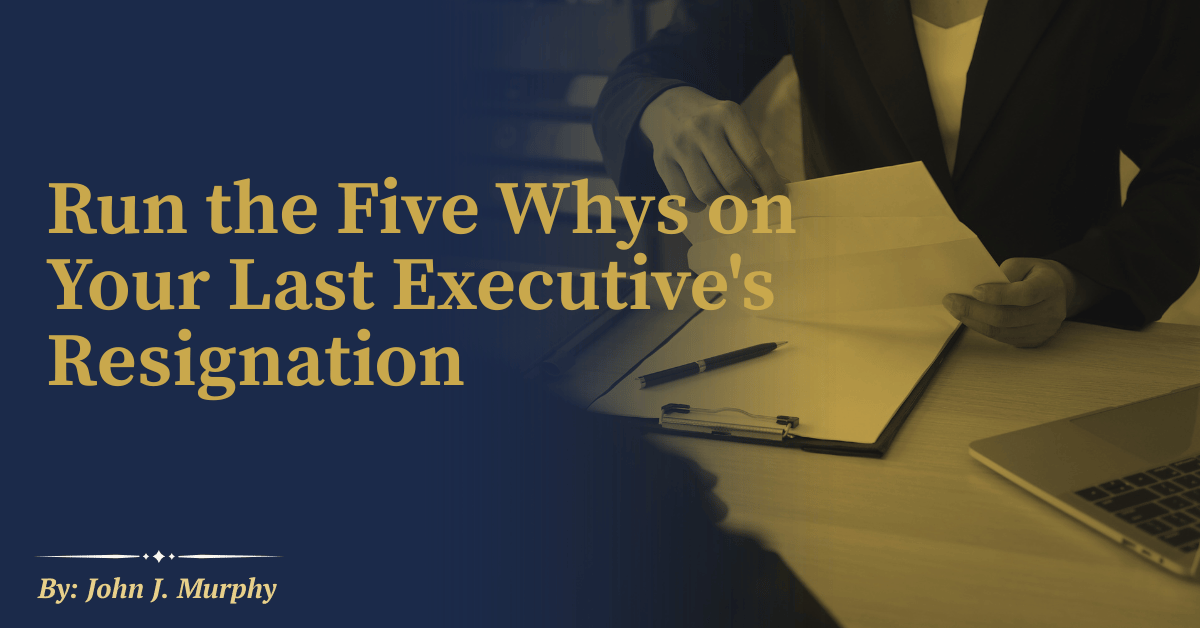
An executive walks into the CEO’s office with a concern about how a major initiative is running. She has data, she has a proposal, and she has been thinking about it for weeks. Within two minutes she hears that this isn’t a good time, that there isn’t a budget for it, and that the current approach is working fine. She walks out, and she doesn’t bring the next concern forward. Eighteen months later she takes a call from a recruiter.
If any part of that scene felt familiar, keep reading.
What It Looks Like From the Inside
In organizations where executives are afraid to share feedback, the responses to a raised concern tend to repeat. The leader gets defensive. They offer excuses about timing and money. They say they disagree and that nothing is wrong with the way things are done now, or that it’s always been this way. Often they take the feedback personally, which tells you the real issue sits with the person hearing the feedback.
Under most of that defensiveness is insecurity. Some bosses believe that because they’re the boss, they’re supposed to be the smartest person in the room, so a better idea from someone else feels like a threat.
The silence gets worse when there’s no transparency at the top. When executives don’t know the plans, they don’t want to stir things up or end up on the radar for sounding negative. Nobody wants to be blacklisted, and in the absence of information people assume the worst.
Run the Five Whys on It
Start with the undesirable effect, which is an executive resignation that nobody saw coming.
- Why did she leave? She found a role where she felt heard.
- Why didn’t she feel heard here? Her feedback was shut down every time she raised it.
- Why was it shut down? The person she reported to got defensive and took it personally.
- Why did he react that way? He saw disagreement as a challenge to his authority.
- Why does that view survive? The organization has never built an environment where an open exchange of ideas is expected at the top and every executive is held accountable.
The root cause is an environment that is not psychologically safe. That creates a disconnect between the executive and the company, and once the disconnect is there, finding another place to work is a short step.
What Changes When Leaders Pull Instead of Push
Great leaders create psychological safety, a place where people can say what they see without fear of consequence. The leader pulls with questions. One of the most useful questions a leader can ask is “Tell me what’s wrong with this idea.” Another is “What is the risk of not doing it?” When a CEO asks questions like these out loud, it gives everyone at the table permission to speak. In fact, it challenges them to speak up and challenge one another – safely!
At the senior level, it’s a team effort. The executive team has to agree on where the company is going, and then on how it’s going to get there. When the how is agreed together, raising a concern about execution becomes part of the job.
The fourth principle of Lean is to involve and enable people and give them the authority to make the change. In a Kaizen event, we use facts and set opinions aside. We examine a process or value stream end to end, then report back to senior leadership on how it works today, what’s wrong with it, the root cause, and what the team proposes to change. People are asked to report problems, so reporting them stops being risky. In fact, it is expected.
A Question for Your Next Leadership Meeting
Think about the last time someone on your team brought you feedback you didn’t want to hear. How did you respond, and did they bring you the next one?
If the answer made you uncomfortable, my two-day executive workshop is built for leadership teams that want to get aligned on the direction and the how, with every voice in the room.